Awning wind sensors: Do you need one for your deck?
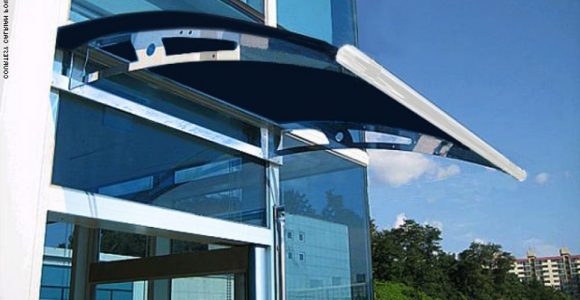
An Australian deck awning can turn a bare patch of paving into a comfortable outdoor room, but its value depends on what happens when the wind arrives. Automatic retractable models can close at a preset gust threshold, giving busy households a way to protect the canopy without rushing outside with a crank.
Not every awning needs that automation. A sheltered pergola, a well-fixed fixed canopy or a manual shade may already suit the site, while a sensor is especially useful where gusts are frequent, the awning is costly, or nobody is home to stow it. The right decision comes from the location, the awning system and the local wind pattern rather than a generic wind-speed number.
Why deck wind is different from a forecast
Perth’s suburbs can catch the afternoon sea breeze, including the strong “Fremantle Doctor,” while Melbourne’s weather can change right through the afternoon. A gust shown in a Bureau of Meteorology forecast may describe one exposed location, not the wind swirling around a particular deck.
Walls, fences, trees and neighbouring roofs create turbulence, which can make a fair bit of difference between the street forecast and the deck itself. A site visit with an experienced awning installer is more useful than trusting an app alone, particularly where the property sits below a ridge or beside a high fence.
Keep product specifications separate from general-interest headlines: a bonus-number update may look current, but it cannot establish an awning’s wind rating or installation requirements. Ask the supplier for tested system data, the threshold range and the conditions under which the claim was measured.
What the sensor actually monitors
Most deck systems use an anemometer, reed switch or electronic wind detector to measure airflow and send a signal to the awning motor. When the selected threshold is reached, the canopy retracts and is usually secured in its housing. Some systems also use a wind direction input to protect a folding arm or adjustable side screen.
The sensor is a trigger, not a structural engineer. It does not measure the load on brackets, fabric tension or anchor movement, and it cannot compensate for weak fixings or an undersized frame. A canopy that closes perfectly can still be unsafe if posts, footings or wall anchors were not designed for local wind actions.
A rain sensor may share the same controller, but it measures water rather than airflow and should not be used to infer wind safety. Position and housekeeping also matter. Mount the detector in representative airflow without placing it directly in the wake of a parapet or tree, and keep leaves, cobwebs, bird droppings and salt from interfering with the mechanism.
When the investment is easiest to justify
The clearest case is a motorised retractable awning on an exposed coastal, suburban or elevated site. It is particularly sensible if the canopy has expensive custom fabric, the deck contains vulnerable furniture, or the owners are often away when a squall develops. Automatic closure then provides consistent protection instead of relying on good timing.
A sensor is also useful where trees and nearby buildings make gusts difficult to predict by eye. It can stow the shade before damage occurs and reduce the stress of leaving a motorised awning extended through a windy night. This convenience is most valuable when it replaces a real recurring risk, not simply because a controller has another feature.
Less compelling cases include a new fixed awning correctly designed and anchored for the site, or a small manual shade that can be rolled up in seconds. Adding a sensor to equipment that cannot retract may create false confidence, while retrofitting an incompatible controller may cost more than selecting the right system from the outset.
Where wind protection still needs a human
Automatic operation should complement routine care, not replace it. Check the canopy before a forecast change, remove loose objects from the deck and know how to close or isolate it manually. If a sensor trips repeatedly in still conditions, investigate its location and wiring rather than simply raising the threshold.
A qualified awning installer or electrician should handle mains-powered controls, cable routing and any alteration to the motor. Australian homes use 230-volt power and outdoor fittings must suit the exposure; in cyclone-prone areas such as Darwin, the wider structure needs to meet the relevant wind design and local building requirements.
Keep the sensor free of insects and debris. If the problem is pests rather than wind, identify them before treatment: advice written for Texas pest guidance may not match Australian species, climate or building practices, and spray should never be directed at electrical components.
Matching the awning to Australian conditions
Australian conditions ask more of a deck canopy than wind speed alone. UV exposure degrades fabric and cables, coastal salt corrodes metal, and heavy rain can overload a folding arm or leave water trapped in the roller. The entire awning—fabric, frame, motor, fixings and controller—should be assessed as one system against the wind-load provisions of AS/NZS 1170.2 and the manufacturer’s instructions.
Cyclone regions require appropriately designed systems and professional advice; a clever sensor cannot make an ordinary domestic awning cyclone rated. In temperate cities, a correctly sized retractable awning with a sensible factory-set threshold may offer the right balance of shade, ventilation and protection.
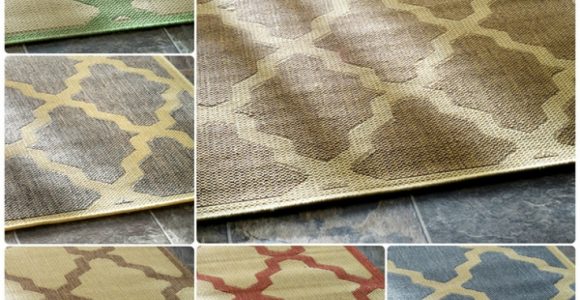
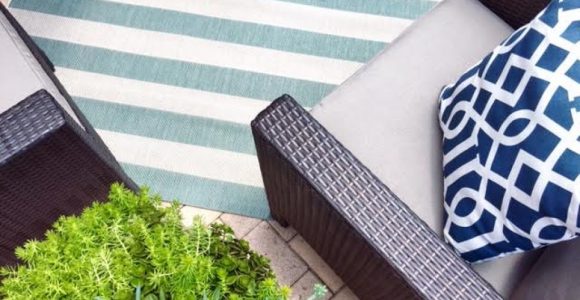
Shade is only one layer of deck comfort. If the awning shelters an outdoor dining area, a stain-resistant rug can define the zone and protect the surface from food and drinks; these stain-resistant rug picks are a useful starting point for Australian conditions. The rug should sit on a stable, drained surface and never conceal an awning’s drainage or anchoring requirements.
A practical buying and installation checklist
Start with the existing awning and controller, not an advertised wind-speed figure. Bunnings and Mitre 10 carry outdoor-living products, while specialist suppliers and local trades may be better placed to match a retrofit. Measure the opening in metres, compare actual fabric widths and check whether the quoted price includes delivery, programming, service and local warranty support in Australian dollars.
Choose the system by these essentials
- Confirm whether the sensor is factory-integrated or genuinely compatible with the awning’s controller and motor.
- Compare the adjustable threshold, test method, response behaviour and manual override with the manufacturer’s specifications.
- Check the outdoor-rated enclosure and expected exposure to sun, salt, rain, insects and wind-driven debris.
- Ask for written operating instructions, local warranty support and a clear procedure if the canopy fails to retract.
Verify these points before the first storm
- Have the supplier or installer set the threshold; do not override it without written guidance.
- Test a full extension and retraction in calm weather, then use the supplied test function to check the response.
- Inspect the sensor and housing regularly for leaves, corrosion, water ingress and blocked movement.
- Record the service contacts, controller settings and manual-close steps in the household maintenance file.
The installation should use representative airflow and concealed, protected cabling, but a tidy job still needs correct fixings and safe isolation, especially near salt water. A short handover is worthwhile because household members should know what the awning will do in a gust and how to use the manual controls safely.
Turn the sensor into reliable deck comfort
Choose automatic protection when it solves a familiar problem: an exposed motorised awning that needs to stow before a gust, especially when nobody is at home. Choose manual or fixed shading when exposure is low and the structure has already been designed for the site, and avoid adding automation that cannot be supported or serviced.
Make the next step a proper site assessment. Record prevailing wind, note nearby obstructions, identify the awning type and ask a specialist supplier to confirm the system rating, installation method and local code requirements. Test the completed installation, then book the sensor into the same maintenance routine as gutters, outdoor furniture and deck surfaces.
That approach keeps the convenience without the guesswork. Book the site assessment, confirm the operating threshold in writing and keep the manual fallback ready for the next changeable afternoon.