Matching outdoor rug colours to your hardscape
An outdoor rug can make a paved terrace feel like a proper living room rather than a collection of furniture sitting on concrete. It softens hard surfaces, defines a dining or lounge zone, and adds colour without the cost or permanence of replacing tiles, pavers or decking. The right rug can also connect nearby planting, fencing, awnings and exterior walls into one considered scheme.
The best way to match outdoor rug colors to your hardscape is to look beyond the most obvious shade. Grey paving may contain blue, green or warm beige undertones, while sandstone can shift from cream to gold depending on the light. In Australian gardens, strong sun, dusty conditions, coastal air and frequent entertaining all affect how a colour choice looks and performs.
Start with the undertones in your paving
Begin by identifying the base colour of the hardscape rather than matching the rug to one isolated tile. Lay a few rug samples, cushions or fabric swatches on the paving during different parts of the day. A charcoal outdoor rug may look crisp against pale concrete in the morning, then appear almost black beside it under intense afternoon sun.
Cool-toned pavers usually include blue, green or silver-grey notes. They work well with slate, navy, eucalyptus, muted sage and clean white. Warm hardscapes, such as terracotta tiles, red brick, limestone and golden sandstone, suit clay, rust, ochre, olive and warm taupe. If the surface is a neutral mid-grey, you have greater freedom, although a rug with at least one repeated grey note will help the scheme feel deliberate.
Do not expect an exact colour match. Outdoor materials weather at different rates, and a rug that is identical in colour when new may look disconnected once the paving develops stains or patina. A related shade with a clear contrast usually looks more natural and gives the hardscape some definition.
Use contrast to define the outdoor room
Contrast is particularly useful when an entertaining area lacks architectural separation. A patterned rug placed beneath a dining table can distinguish the meal zone from a nearby seating area, even when both sit on the same slab. For a pale concrete patio, try a deeper rug in charcoal, bottle green or navy. For dark basalt pavers, a sand, oatmeal or faded blue design can stop the setting from feeling heavy.
High contrast creates energy, which may suit a pool deck, barbecue area or colourful courtyard. Lower contrast feels quieter and tends to work well beneath a neutral sofa. A beige rug on cream limestone creates a relaxed, resort-like effect, but texture or pattern is needed to prevent the arrangement from becoming flat.
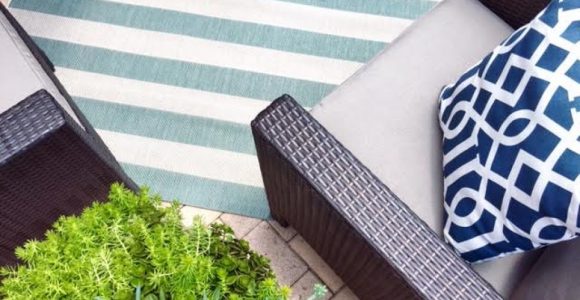
Consider the proportions of the space before selecting a bold colour. A small balcony in an inner-city Sydney apartment can handle a strong stripe or geometric design because the rug becomes a focal point. On a broad suburban patio, a small, busy pattern may disappear beneath a large table and several chairs. In that situation, a larger motif or two-colour border will read more clearly from the garden.
Let Australian light guide the palette
Australian sunlight changes colour dramatically. A vivid orange may look cheerful in a covered Brisbane alfresco area but overly bright on an exposed Perth terrace. Pale colours reflect glare on north-facing patios, while saturated shades can fade faster in open positions. Test your preferred rug colour outdoors rather than relying solely on an online product image.
For homes near the coast, soft blue, weathered teal, chalky white and sandy beige echo the landscape without turning the patio into a themed beach setting. Salt air can make metal furniture and fixtures age quickly, so a rug with a gently faded appearance may remain attractive as the rest of the area develops character. In bushland suburbs, olive, gumleaf green, clay and stone tend to sit comfortably beside native planting.
UV stability matters as much as appearance. Look for solution-dyed polypropylene or another fibre designed for outdoor use, especially on a north-facing deck. A colour described as “natural” is not automatically fade-resistant. Ask about UV treatment, water resistance and cleaning instructions, and remember that an inexpensive rug may cost more over time if it needs replacing every summer.
Coordinate the rug with furniture and finishes
Your hardscape is the foundation, but the rug should also connect with the furniture above it. Pick up a colour from outdoor cushions, dining chairs, a rendered wall or a timber screen. Repeating one shade in two or three places creates cohesion without making every element look matched as a set.
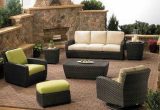
For example, grey pavers, teak furniture and a cream rendered wall could be brought together with a rug combining warm ivory, driftwood brown and a small amount of charcoal. If your furniture is black aluminium, a rug containing black in a fine border or pattern will anchor it. A terracotta accent can link a brick wall to cushions and nearby pots without overpowering the entire patio.
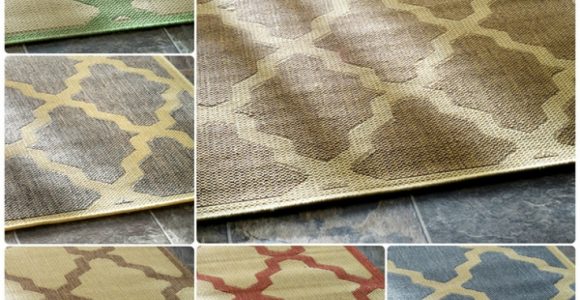
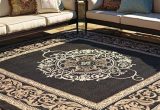
The style of the hardscape should influence the pattern as well. Linear pavers pair naturally with stripes, grids and restrained geometric designs. Irregular stone looks more comfortable with organic patterns, faded medallions or gently uneven bands. A contemporary concrete courtyard may benefit from a simple block colour, while a traditional veranda can accommodate a classic border or subtle trellis motif.
For further ideas about bringing indoor comfort outside, French Creative offers design-led inspiration that can help connect an alfresco area with the wider home. The goal is a visual transition, so the rug should feel like part of the house rather than a random accessory placed on the paving.
Choose a pattern that suits the setting
Pattern can disguise everyday outdoor marks, which is valuable in a home where children, pets and guests move between the lawn and patio. A mid-scale design in several related colours hides dust more effectively than a flat pale rug, while still making the seating area look polished. Avoid very fine, high-contrast patterns if the area is viewed from a distance, as they can appear visually restless.
Stripes can make a narrow balcony seem longer when laid along its length. A broad border can frame a square seating arrangement, and a central motif can reinforce the position of a coffee table. Keep the rug large enough for the front legs of sofas and armchairs to sit on it; otherwise, the furniture may look scattered across the hardscape.
If the paving is already decorative, restraint is usually the better choice. Patterned encaustic-look tiles, multicoloured stone or elaborate brickwork need room to remain visible. A plain rug with a tactile weave can provide comfort without competing with the surface underneath. Conversely, a simple concrete slab is an excellent backdrop for a more expressive design.
Test placement, texture and maintenance
Before buying, mark the proposed rug dimensions with painter’s tape or flattened cardboard. Check that doors can open, dining chairs can slide back and that the rug will not cover drainage points. On a sloping patio, water must still run away from the house. Avoid placing a rug where it will sit permanently in a puddle or rub against a sharp paver edge.
Texture changes the perceived colour. A flat-weave rug often looks clearer and more contemporary, whereas a raised or woven surface creates softer tonal variation. This can be helpful when matching a complex material such as mottled sandstone. Make sure the underside is suitable for the surface below, and use a rug pad where recommended to reduce movement and protect polished tiles.
Australian outdoor retailers range from large hardware chains and mass-market home stores to specialist flooring and design suppliers. Comparing fibre specifications, warranty information and actual dimensions is more useful than choosing by colour alone. In rental properties, strata balconies or compact Melbourne courtyards, a lightweight rug that can be rolled away for cleaning may be more practical than a heavy statement piece. For additional hardscape and exterior styling ideas, hardscape inspiration can help you consider the rug alongside paving, planting and built features.
Wash or hose the rug according to the manufacturer’s directions, then allow it to dry completely before putting it back. Sweep beneath it from time to time so grit does not mark the paving, and rotate it occasionally if one section receives stronger sun. These small habits preserve both the colour and the surface beneath.
A successful outdoor rug does more than fill an empty patch of paving. It balances colour temperature, frames furniture and gives the patio a clear purpose. Compare samples in real daylight, work with the undertones already present, and choose a material suited to Australian exposure. Then bring home the rug that makes your hardscape feel comfortable, connected and ready for everyday living.