How to choose the right size outdoor rug for a living area
Knowing how to choose the right size outdoor rug for a living area comes down to the furniture footprint, intended use and exposure. A well-sized rug can visually enlarge a patio, define a lounge zone or make a compact courtyard feel usable. An undersized rug leaves seats and tables stranded on paving, while an oversized one can dominate the area and collect more dirt along its edges.
Start with the space as it will be used, not the empty rectangle seen from the house. Australian outdoor areas often serve as dining rooms, play spaces and weekend barbecue spots, so dimensions must support the furniture and the movement around it. Measure first, compare the result with available outdoor rug sizes, then consider weather performance before choosing the material.
Measure the real living area
Measure the length and width of the patio, deck or courtyard at more than one point, especially if the paving slopes or the timbers are uneven. Use a tape measure rather than estimating from paving modules, and record both the narrowest and widest dimensions. A rectangular rug needs a level, square footprint to sit properly.
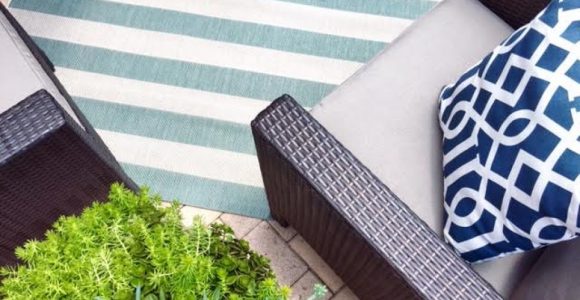
Next, draw the furniture arrangement to scale. The rug should extend beyond the main seating group so at least the front legs of sofas and armchairs remain on it. For a dining set, imagine every chair occupied and pulled back. If the rug cannot contain those positions, a larger size will improve comfort more than a thinner or softer pile.
Write down your minimum usable dimensions and allow some tolerance at the edges. Australian rug retailers commonly stock metric sizes such as 160 × 230 cm, 200 × 290 cm, 240 × 300 cm and 300 × 400 cm, with smaller runners for narrow balconies. These familiar sizes make comparisons easier, but the furniture arrangement should determine the final choice.
Match the rug to the furniture layout
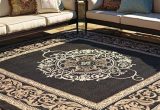
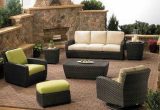
For a lounge arrangement, the rug should visually connect the entire seating group rather than sit beneath only the coffee table. A sofa and two occasional chairs generally need a rug at least as wide as the combined width of the outer arms. If the group floats on separate paving sections, consider an outdoor living area rug large enough to bridge the change in surface.
Dining areas require a different calculation. Pull out every chair and mark where the back legs travel. The rug should cover the chair zone with space to spare, allowing people to stand and move around the table without stepping onto its edge. A round rug can work well beneath a circular table, provided it reaches beyond the chair positions when they are occupied.
Compact courtyards and balconies sometimes require a deliberate compromise. A smaller rug can work as a defined seating area without blocking the path between a back door and garden. Australian homes frequently have alfresco spaces that shift between casual lounging, outdoor dining and children’s activities, so choose a size that supports the most frequent arrangement without creating a trip hazard.
Select a material for Australian conditions
Solution-dyed acrylic and polypropylene are practical choices for exposed patios because they resist fading, stains and moisture better than many indoor fibres. Flatwoven constructions and low-pile rugs also tend to dry faster after rain. Check that the product is described as outdoor-rated, since a water-resistant backing does not necessarily mean the entire rug can remain outdoors during heavy downpours.
Jute, sisal and bamboo create a warm, natural look and are widely available through Australian interior stores. They suit dry, shaded decks where there is little standing water, but prolonged sun, humidity and irregular watering can cause shrinking, fading or stiffness. Untreated natural fibres can also attract insects, while synthetic options are usually easier to rotate, hose and maintain.
Climate varies considerably across Australia. Perth gardens experience intense UV exposure, Melbourne can have damp and changeable conditions, Brisbane brings humidity and sudden summer downpours, and Sydney’s coastal properties may encounter salt in the air. Choose fibre, colour and UV performance for the actual location rather than relying on a generic outdoor label.
Choose shape and placement for how the space works
A rectangle is the most versatile shape for furniture because its proportions can follow a sofa, balcony or dining table. Align its long edge with the main architectural feature, such as a deck board direction, window wall or outdoor sofa. The edges should sit beyond the furniture but remain visually related to the patio, rather than stopping abruptly in the middle of the paving.
Round rugs soften angular courtyards and work particularly well beneath small café tables or pedestal seating. They also create a clear zone in an open area without visually dividing the space as strongly as a rectangle. However, a round rug can dominate a narrow balcony if its diameter exceeds the available width, and it should never create an uneven edge beneath a frequently used doorway.
The surrounding landscape affects the result as well. When the outdoor room sits beside a timber boundary, a matching wooden gate can extend the same clean line and make the patio feel deliberately integrated with the garden.
Plan for rain, drainage and daily care
Outdoor rugs should never conceal a drainage problem. Before buying, check that water can flow away from the house and inspect the area after a shower. A rug on a sloping patio may prevent water reaching the drainage channel, while a thick rug on horizontal boards can trap moisture underneath. Look for a breathable backing and avoid placing the rug where it overlaps a downpipe grate.
Leaves, pollen and fine grit can work their way into outdoor pile, particularly around garden edges. Vacuum or sweep the rug regularly, remove debris before it becomes embedded, and follow the manufacturer’s cleaning instructions. Avoid leaving a wet rug folded or rolled in a sealed bag, and allow it to dry fully in sunlight and airflow, especially during a humid week.
Pests around damp edging are a separate issue from rug dimensions. This outdoor pest control resource explains common warning signs, while an Australian licensed operator should confirm any treatment needed around the property. Correct sizing will improve the room, but it cannot solve drainage, vegetation or insect issues.
Compare quality, price and local availability
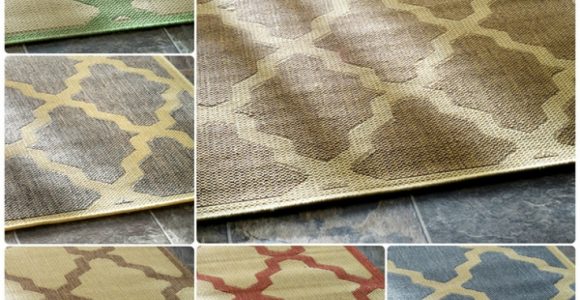
Compare more than colour when checking outdoor rug samples. Look at pile density, stitching, backing, UV resistance and the stated product dimensions. A product sold as “weatherproof” may have a polypropylene top with a polypropylene or rubber backing, while a natural-fibre rug may need a separate waterproof liner. Reversible rugs can be turned regularly, extending their appearance in fading conditions.
Prices in the Australian market are usually shown in Australian dollars and include GST, but delivery can change the final cost for bulky rugs. Compare showroom stock with online suppliers and confirm whether samples are available before committing. A slightly higher price may be worthwhile if the rug has replaceable parts, a secure backing and clearly stated care instructions.
Check the return policy, especially for rugs with a specific colour or pile direction. Some sellers treat a correctly sized rug as a special order and restrict returns once it has been delivered. Ask for the exact measurements, available colours and expected lead time. This avoids discovering that a technically suitable size has to be imported or cut after the order is placed.
Test the size before you commit
Use masking tape on the patio to mark the proposed rug boundary, or draw the outline to scale on cardboard. Place furniture inside it and simulate an ordinary evening rather than a tidy furniture showroom. This simple test reveals whether doors still open properly, whether chairs can be pulled back and whether people need to step over the rug to reach the garden.
Walk across the marked area carrying a drink, pushing a wheelbarrow or moving a chair. Check for raised edges and awkward gaps between the rug and hard surfaces. A rug that looks correctly proportioned from a window can feel too small once the room is occupied. The best size supports the furniture and circulation without wasting valuable floor space.
Compare two likely dimensions rather than one, then check each against the weather, material and care requirements. The final choice should work with the actual layout, fit within the available footprint and remain comfortable through Australian summers, winter moisture and regular outdoor use.
Measure your space, mark at least two candidate sizes and place them around the furniture today. Order the sample that makes the outdoor living area look generous, practical and inviting, then complete the purchase with the exact dimensions, fibre and care requirements confirmed in writing.