Patio Rugs for Rain, Sun and Everyday Australian Life
Choosing a Patio Rug That Withstands Rain and Sun Exposure starts with the patio, not the swatch. A rug that looks right on a showroom floor can buckle under a summer storm, fade beside a west-facing wall or remain damp after wet feet cross it. The useful test is not whether a product handles an occasional splash, but whether its fibres, dyes, backing and installation suit the exposure around your home.
This guide explains how to compare outdoor carpets for Australian conditions, from quick-drying synthetics to solution-dyed fibres and rubber-backed constructions. It also shows where shade, drainage, colour choice and realistic maintenance can protect your investment and keep a patio comfortable through humid evenings, dry heat and everyday family use.
Read the weather your patio actually sees
Australian conditions vary by region, so avoid choosing for an average climate that may never exist at your address. Sydney can deliver sharp summer downpours, Melbourne brings changeable wind and showers, Brisbane regularly faces very strong UV, and Perth combines hard sunlight with heat and dust. Check the patio at several times of day, especially where a roof, wall or tree creates reflected exposure.
Local habits matter too. An alfresco area may host long lunches, barbecues, children playing and swimmers tracking chlorine from a pool onto the deck. A rug that only suits a quiet, shaded sitting room will struggle with sand, food spills and repeated wetting. Think about how the space is used before deciding how delicate a surface you can maintain.
Australian home retailers commonly stock outdoor rugs in polypropylene, olefin and polyester, with premium acrylic options also available. Terms such as “UV-stabilised”, “water-resistant” and “indoor-outdoor” are common, but they are not equally meaningful. Compare the detailed fibre content, construction, testing claims and care instructions rather than treating a broad product label as a performance guarantee.
There is no single national product standard devoted to patio rugs, although the Australian Consumer Law still applies. Claims about fade resistance or outdoor durability must not mislead, and a rug represented as suitable for outdoor use should be reasonably fit for that purpose. A permanent awning or fixed structure may also trigger council or building requirements, especially for wind loads.
Compare fibres, dyes and pile construction
Start with the fibre. Polypropylene, often sold as olefin, is a practical choice because it sheds water, dries quickly and generally handles sunlight well. Solution-dyed acrylic costs more but has excellent colour retention and a soft, refined pile. Polyester and recycled synthetics can perform well when specifically stabilised and tested, so read the specification rather than judging them by a family name.
Natural fibres need care. Jute, sisal, cotton blends and sisal-style rugs may feel warm underfoot, yet they can absorb water, stain unevenly and develop mildew in a shaded or coastal patio. Even water-repellent treatments usually slow absorption rather than eliminate it. Reserve these materials for a dry, covered area or accept more frequent cleaning and eventual replacement.
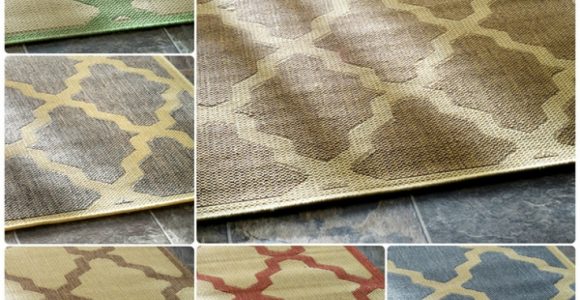
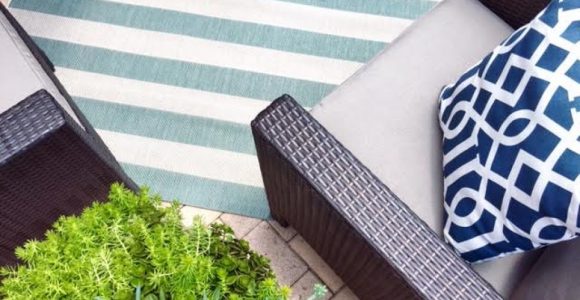
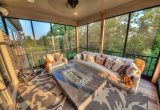
Construction changes performance as much as the fibre. Dense flatweaves and tight low-pile surfaces shed water and grit better than deep loop pile, while a woven or tufted edge can loosen if it stays wet for long periods. For context on balancing rugs with furniture, plants and shade, outdoor living ideas offer useful visual direction. Ask for a sample and bend it to check how the surface and edge recover.
Check rain handling, drainage and backing
“Water-resistant” usually means the surface repels a limited amount of moisture; it does not make a rug waterproof. Rain can enter through open weave lines, seams and the backing, then sit beneath the pile. Check whether the backing is described as waterproof, mould-resistant or suitable for wet use, and look for closed edges rather than exposed fringes that absorb and carry water.
Where the rug sits matters. A slightly graded concrete slab drains better than a perfectly flat one, while timber decking can hold moisture beneath a tight synthetic rug. Avoid placing any deck rug directly over grass, gravel or fine pavers that trap grit and damp. Leave enough space for water to run off, keep the surface clean and make sure furniture feet do not pinch or twist the edges.
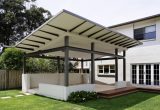
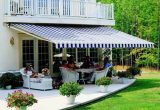
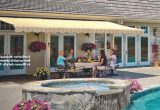
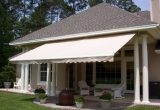
A shelter can reduce the problem more effectively than a heavier rug. A correctly designed awning keeps most wind-driven rain off the textile and adds shade during the hottest part of the day. For an uncovered entertaining zone, compare local suppliers and building requirements; custom sheet metal awnings can be one option to investigate. Fixings, wind ratings and drainage should be checked before installation.
Judge UV resistance, colour and surface heat
UV performance deserves specific evidence. Ask for a tested light-fastness result, such as ISO 105-B02 or ASTM G154, and check what was tested: the fibre, dye method, colour and exposure cycle. These laboratory tests help compare products, but they do not predict every balcony, coastal site or shaded corner. A good retailer should explain the rating rather than simply say a rug is “UV resistant”.
Colour and heat work together. Dark rugs absorb more solar energy and can become uncomfortably warm, while pale colours reflect more heat but reveal dust, barbecue grease and garden debris. Mid-tone, tightly woven outdoor fabrics often form the easiest compromise. Solution-dyed colours are usually more stable, yet a colour sample should still be viewed outdoors before purchase because reflected light can change it dramatically.
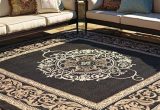
Also consider glare, contrast and fading around fixed surfaces. A rug with a glossy backing can reflect light toward a seating area, and a strongly patterned weave may clash with brick, sandstone or timber decking. Choose a colour and texture that complements the architecture, then prioritise a surface you can hose down and dry. Comfort under bare feet matters more than a dramatic pattern that quickly shows wear.
Make a practical selection checklist
A reliable patio rug balances weather performance, safety, appearance and care. Before paying, use this selection checklist at home and compare the final products using the same criteria.
- Measure the full entertaining area, not just the table footprint. Allow room for chairs to remain on the rug when pulled out, and keep doors, pavers and steps clear.
- Read the fibre, dye, pile, backing and warranty information together. A UV-stable face with a vulnerable backing is not a genuinely outdoor-rated rug.
- Check drainage at the intended location by wetting a small sample or observing how the slab or deck sheds water. The rug should dry fully without lifting or sliding.
- Compare colours and textures in daylight. Place samples against the paving and view them during warmer hours, as neutral tones can soften bright brick while darker shades may absorb heat.
- Compare total ownership costs, including an outdoor-rated underlay, cleaning products and likely replacement. A higher purchase price may be justified by clearer testing and a longer expected lifespan.
Ask each retailer for the full technical specification, cleaning instructions and warranty exclusions. Confirm whether the rug can be hosed or wet-cleaned, whether its backing may contact damp concrete, and whether the supplier guarantees fading under normal outdoor use. A clear written warranty is more useful than broad claims printed on packaging.
Install, clean and keep the rug in service
Before laying the rug, remove grit, oil and leaf residue from the patio and allow the surface to dry. Use an outdoor-rated, breathable underlay or a manufacturer-approved non-slip pad. Avoid standard carpet underlay, waterproof membranes or adhesive unless the rug maker specifically permits them, as trapped moisture can cause mildew and damage timber decking.
Establish a simple care routine. Vacuum or brush away sand regularly, rinse spills with mild detergent and remove chlorine or salt promptly. Let the rug dry fully before replacing furniture, and do not use bleach, strong solvents or a pressure washer unless the care instructions allow it. Machine washing may distort the backing or shrink natural fibres.
Start by measuring the patio, noting its sun and rain patterns and taking a fibre sample outdoors before buying. Choose the rug that dries cleanly, remains stable underfoot and suits the way your family uses the space, then protect it with shade where possible and follow a simple rinse-and-dry routine. That disciplined choice will keep the area comfortable and attractive well beyond the first dry season.